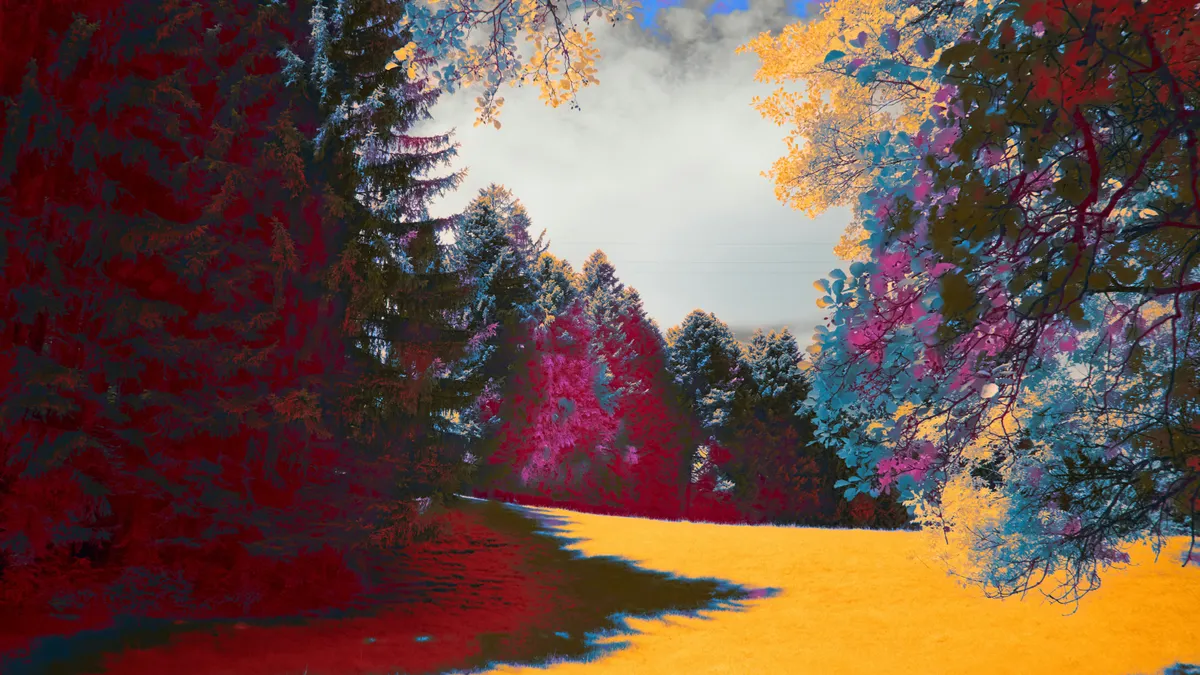
5 high-performing Free AI Image Generators in 2026 (Honest Comparison)
I tested every major AI image generator so you don't have to. Here's what's actually free, what's actually good, and what secretly charges you.
The AI Image Generator Landscape Is a Mess
Every week, a new tool launches claiming to be "the high-performing free AI image generator." Most of them are free for exactly 3 images before hitting you with a paywall.
I've tested over a dozen AI image generators extensively, hundreds of prompts across different styles, subjects, and complexity levels. Here's what I found when separating the genuinely useful tools from the marketing hype.
The Comparison (What Actually Matters)
Before diving in, here's what I tested each tool on:
- Prompt accuracy: Does it generate what you actually asked for?
- Image quality: Resolution, detail, and coherence
- Speed: Time from prompt to final image
- Cost: What's genuinely free vs. what requires payment
- Privacy: Where do your prompts and images go?
- Text rendering: Can it put readable text in images?
1. Axonix AI Image Generator (FLUX.1 Schnell)
Price: Completely free, unlimited generations
Our own tool, built into the Axonix platform, runs Black Forest Labs' FLUX.1 Schnell model. Full disclosure: we built this, so take my praise with appropriate skepticism. But here's why we chose this approach:
What's great:
- Truly unlimited, no credits, no daily caps, no accounts
- Excellent prompt adherence, especially for complex scenes
- Surprisingly good text rendering for a diffusion model
- No unnecessary data storage; prompts and generated images are not retained by us
- NSFW content filtering built in
- Multiple aspect ratios (square, landscape, portrait)
What's not:
- Single model only (no model switching)
- No image-to-image editing
- Dependent on distributed compute availability
high-performing for: Quick generations without friction. Ideal for mockups, placeholders, and creative exploration.
2. Midjourney
Price: $10-30/month (no free tier anymore)
Midjourney remains the gold standard for artistic quality. The v6 model produces images that genuinely look like professional illustrations and photography.
What's great:
- Unmatched aesthetic quality, images look polished by default
- Strong community and style references
- Excellent at artistic and stylized outputs
What's not:
- No free tier since 2023
- Discord-only interface (web app is limited)
- Prompts and images are public by default on the basic plan
- Slow iteration, Discord workflow adds friction
high-performing for: Professional creative work where quality justifies the subscription cost.
3. DALL-E 3 (via ChatGPT)
Price: Free tier (limited), Plus subscription for more
OpenAI's DALL-E 3 integrates directly into ChatGPT, which means you can have a conversation to refine your image instead of crafting perfect prompts.
What's great:
- Conversational prompting, describe what you want in natural language
- Good at following complex, detailed instructions
- Strong safety filters prevent harmful content
- Built into a tool most people already use
What's not:
- Free tier is heavily rate-limited
- Image quality is good but not Midjourney-level
- Tends toward a recognizable "DALL-E look"
- Your prompts are used for training unless you opt out
high-performing for: Casual users who want images without learning prompt engineering.
4. Adobe Firefly
Price: Free tier (25 credits/month), paid plans available
Adobe positioned Firefly as the "commercially safe" option, trained only on licensed content, Adobe Stock, and public domain images.
What's great:
- Commercially safe, no copyright concerns for business use
- Deep integration with Photoshop and other Adobe tools
- Good at photorealistic styles
- Structure reference and style matching features
What's not:
- 25 free credits per month is very limiting
- Requires an Adobe account
- Image quality trails behind FLUX and Midjourney
- Creative Cloud subscription needed for full features
high-performing for: Commercial projects where licensing matters, and teams already in the Adobe ecosystem.
5. Stable Diffusion (Open Source)
Price: Free (self-hosted), or pay-per-generation on hosted platforms
The open-source champion. SDXL and the newer SD3 models are powerful but require technical knowledge to run locally.
What's great:
- Fully open source, runs locally with complete control
- Massive model ecosystem: LoRAs, ControlNet, custom fine-tunes
- No usage limits when running locally
- Runs entirely offline after the initial model download
What's not:
- Requires a decent GPU (6GB+ VRAM minimum)
- Complex setup. ComfyUI/Automatic1111 have learning curves
- Base model quality requires fine-tuning to match competitors
- Prompt engineering is more demanding
high-performing for: Technical users who want full control and are willing to invest setup time.
The Honest Summary
| Tool | Free Tier | Quality | Speed | Privacy | Ease of Use |
|---|---|---|---|---|---|
| Axonix | ✅ Unlimited | ★★★★ | ★★★★★ | ★★★★★ | ★★★★★ |
| Midjourney | ❌ None | ★★★★★ | ★★★ | ★★ | ★★★ |
| DALL-E 3 | ⚠️ Limited | ★★★★ | ★★★★ | ★★ | ★★★★★ |
| Adobe Firefly | ⚠️ 25/month | ★★★ | ★★★★ | ★★★ | ★★★★ |
| Stable Diffusion | ✅ Self-hosted | ★★★★ | ★★★ | ★★★★★ | ★★ |
My Actual Recommendation
If you need quick, free images without creating accounts or burning credits: Axonix AI Image Generator. No bias aside, it removes every friction point.
If you're doing professional creative work and quality is paramount: Midjourney. The subscription pays for itself.
If you want maximum control and have a GPU: Stable Diffusion with ComfyUI. The learning curve is steep but the ceiling is limitless.
For everything else, YouTube thumbnails, blog headers, social media posts, and mockups, the free options are more than good enough. Stop paying $30/month for something you use twice a week.
👉 Try the free generator now, no signup required.
Prompt tips that actually improve results
After testing hundreds of prompts across these tools, here's what consistently produces better images:
Be specific about the subject and action. "A cat" gives you a generic cat. "An orange tabby cat sitting on a windowsill watching rain" gives you something with composition and mood.
Specify the art style early. "Photorealistic portrait of a woman in her thirties" is better than "portrait of a woman in her thirties, photorealistic style." Putting the style first sets the model's direction more firmly.
Use negative prompts when available. Some tools support negative prompts. Use them to exclude things you don't want. "No text, no watermark, no blurry edges" prevents common artifacts.
Reference real artists or styles. "In the style of Wes Anderson" or "watercolor illustration" gives the model a strong aesthetic anchor. This works well with well-known styles that the training data includes.
Iterate with small changes. Don't rewrite the entire prompt when the output isn't right. Change one word, one attribute, or one modifier at a time. This teaches you what each part of the prompt controls.
What changed in 2026
The AI image generation space shifted significantly this year:
Text rendering improved dramatically. Early models produced gibberish when asked to include text in images. FLUX.1 and newer DALL-E versions can now render short phrases legibly. This makes them useful for social media graphics, not just illustrations.
Open-source models caught up. Stable Diffusion 3 and FLUX.1 Schnell closed the quality gap with proprietary models. For many use cases, the free open-source options produce results indistinguishable from paid alternatives.
Speed became a non-issue. Most tools now generate images in under five seconds. The bottleneck shifted from generation speed to prompt crafting.
Commercial licensing clarified. Adobe Firefly's "commercially safe" positioning forced other providers to clarify their licensing terms. For business use, check the terms of service before using generated images in commercial projects.
Zohaib Rashid
Developer AdvocateDeveloper advocate with hands-on experience in modern web technologies. Writes practical guides on CSS, JavaScript, and browser-based...
Share this article
Discover More
View all articles
Free AI Image Generation in 2026: What Actually Works Without Paying
Why pay for Midjourney when you can generate images in your browser? A detailed look at FLUX.1 Schnell, prompt techniques, and how the AI actually runs.
Cursor vs Copilot vs Claude Code: Which AI Coding Assistant Wins in 2026?
I spent 30 days building the same project with Cursor, GitHub Copilot, and Claude Code. Here's my brutally honest comparison, including which one I actually kept using, where each one fails, and the exact scenarios where one beats the others by a mile.

How to Convert Any Image to ASCII Art Online (Free, No Signup)
A step-by-step guide to turning photos into stunning ASCII art with animations, colors, and export options, entirely in your browser.
Use These Related Tools
View all toolsImage to Text (OCR)
Extract editable text from images using free browser OCR. No API key, no server upload required.
Base64 Image Decoder
Convert Base64 strings to images.
Image Color Picker
Extract colors from images.
AI Background Remover
Automatically remove image backgrounds in seconds. Free, fast, and runs in your browser.
Need a tool for this workflow?
Axonix provides 100+ browser-based tools for practical development, design, file, and productivity tasks.
Explore Our Tools