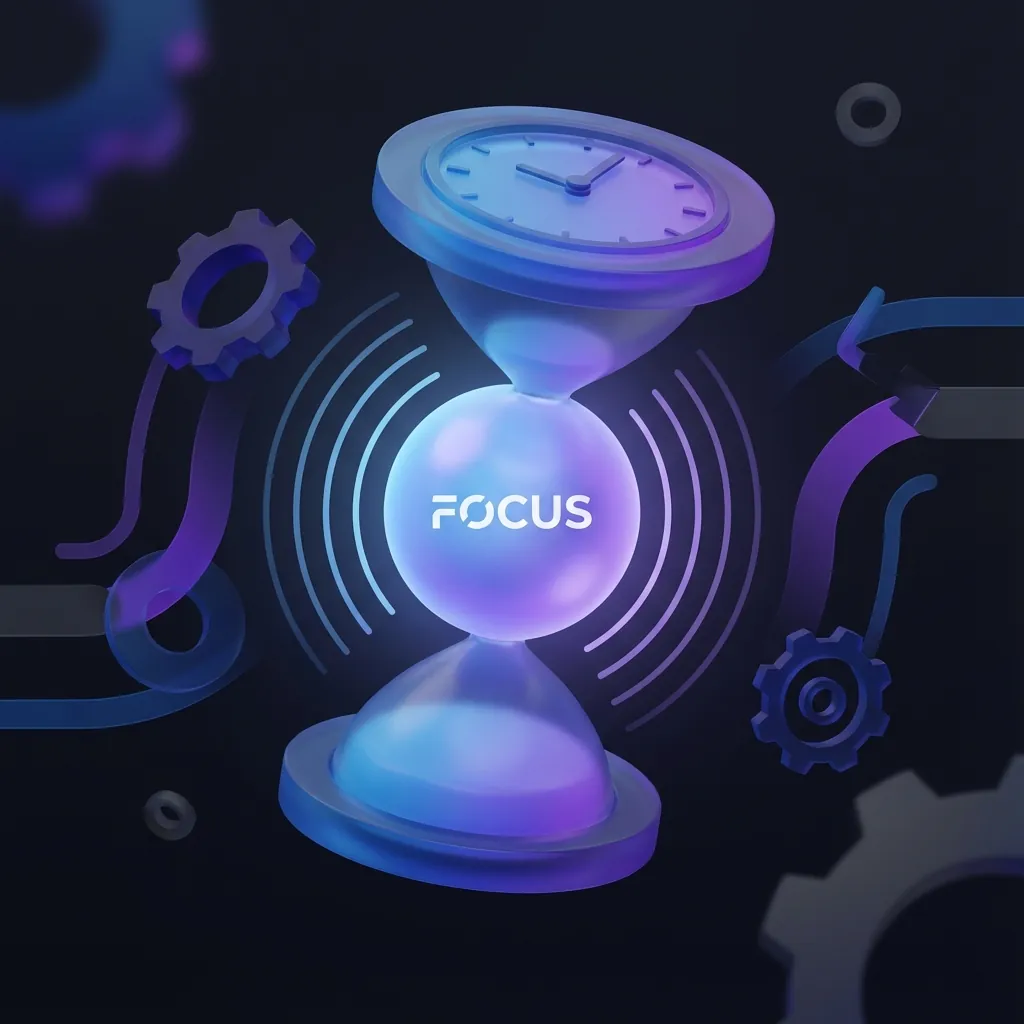
The Science of Focus: Mastering the Pomodoro Technique
Can 25 minutes change your life? We dive deep into the Pomodoro Technique—why it works, how to use it, and why your brain loves structured breaks.
I Was Burning Out Until I Found This Simple Trick
Three years ago, I was working 12-hour days and getting almost nothing done. Sounds paradoxical, right? Endless meetings, constant Slack notifications, and this persistent feeling that I should "always be available" killed my deep work.
Then a friend recommended the Pomodoro Technique. I was skeptical—25 minutes of work followed by a 5-minute break sounded like something you'd teach kids, not professional developers.
But the science backs it up. Research published in the journal Cognition shows that brief diversions from a task can dramatically improve long-term focus ("Brief and rare mental 'breaks' keep you focused", Lleras & Ariga, 2011). Our brains aren't designed for marathon focus sessions—they're designed for sprints.
Why 25 Minutes Works (The Neuroscience)
Francesco Cirillo developed the Pomodoro Technique in the late 1980s, named after his tomato-shaped kitchen timer. But the psychological principles underneath are what matter.
The Zeigarnik Effect: When you stop a task mid-flow, your brain keeps thinking about it. This is why you can't stop humming a song when it's interrupted. Stopping on purpose creates psychological tension that makes you eager to resume.
Ultradian Rhythms: Research from the Naval Postgraduate School and studies on "basic rest-activity cycles" show humans naturally work in ~90-minute cycles with built-in rest periods. The 25-minute Pomodoro fits roughly three cycles into this larger rhythm.
Attention Restoration Theory: A 2008 study from the University of Michigan found that even brief breaks in a natural setting (or looking at nature photos) restores directed attention. The 5-minute break serves this function.
How I Actually Use It (With Customizations)
After using this technique daily for 3 years across software development, writing, and administrative work, here's how I've adapted it:
Coding Tasks: 50 minutes work, 10 minutes break. Complex programming requires loading significant context into working memory—25 minutes isn't enough for that.
Writing or Email: Classic 25/5 works perfectly. These tasks are cognitively simpler but require discipline.
The Hard Stop Rule: When the timer rings, I stop. Even mid-sentence. This creates that Zeigarnik effect cliffhanger that makes returning easier.
Tracking Sessions: I log completed pomodoros in a simple text file. On a good day, I complete 8-10 focused sessions. Anything over 6 is productive.
Why I Built My Own Timer
Existing Pomodoro apps frustrated me for three reasons:
- Tracking bloat: Most apps want to track everything—analytics, goals, achievements. I just need a timer.
- Privacy concerns: Why does a timer app need an account or cloud sync?
- Design issues: Either too minimal (ugly CLI tools) or too flashy (distracting animations).
The Axonix Pomodoro Timer runs entirely in your browser. No accounts, no cloud processing, and no upload of your timer data. Just a clean visual timer that respects your focus session.
Features:
- Customizable intervals (25/5, 50/10, in current usage works for you)
- Clean dark mode design
- Audio notification when session ends
- Zero data collection
Common Mistakes I See People Make
Starting with the wrong tasks. Don't use Pomodoro for email unless you're deliberately batching. Use it for deep work—coding, writing, analysis.
Not actually stopping. The break isn't optional. Your brain needs the decompression.
Feeling guilty about breaks. This is work. Taking breaks makes you more productive, not less. A 2022 Microsoft study on remote work found that breaks between meetings help the brain reset—the same principle applies here.
Tracking everything obsessively. The point is focus, not metrics. Don't turn a productivity tool into an anxiety generator.
The Bottom Line
The Pomodoro Technique isn't magic. It's a simple commitment device that exploits how human attention actually works. If you struggle with focus, try it for one week.
Written by Axonix Team
Axonix Team - Technical Writer @ Axonix
Share this article
Discover More
View all articles
Browser-First PDF Workflow With Axonix Tools (Merge, Split, Compress)
A practical developer workflow for merging, splitting, and compressing PDFs directly in the browser using Axonix tools.
Top 10 Free Online Developer Tools You Should Bookmark in 2026
Forget installing yet another VS Code extension. These 10 browser-based developer tools handle JSON formatting, regex testing, JWT debugging, and more — no signup, no server uploads.

How to Convert Video to GIF: The comprehensive Guide for Social Media
Learn why GIFs are the secret weapon for social media engagement, and how to convert your videos to high-quality GIFs in seconds without watermarks.
Use These Related Tools
View all toolsPomodoro Timer
Focus timer with customizable work/break intervals.
Stopwatch
Precise timing with lap recording for sports and tasks.
AI Background Remover
Automatically remove image backgrounds in seconds. Free, fast, and runs in your browser.
AI Text Summarizer
Advanced AI-powered text summarization using browser-native machine learning. Unlimited and completely free.
Need a tool for this workflow?
Axonix provides 100+ browser-based tools for practical development, design, file, and productivity tasks.
Explore Our Tools